Storms don’t wait for convenient timing, and neither do falling branches. If you’ve woken up to a tree down across your driveway, a split trunk leaning toward your roof, or a branch resting on power lines somewhere between Chester and the Wirral, the next hour matters more than you might think.
This guide walks you through exactly what to do in a tree emergency, how professional emergency tree services work, and why calling a qualified tree surgeon in Chester quickly can save you money, stress, and risk.
Why Storm Damage Happens More Often Than People Expect
Chester and the surrounding Cheshire plain sit in a fairly exposed position, and mature trees along Hoole, Upton, Boughton, and the wider Wirral and Deeside areas often take the brunt of autumn and winter gales. Waterlogged ground loosens root systems, high winds put lateral stress on the crown, and older trees with existing deadwood or decay are the first to give way.
The most common storm-related call-outs include:
- Snapped or hanging branches caught in the canopy (“widowmakers”)
- Whole trees uprooted onto fences, sheds, or driveways
- Split trunks that look stable but are structurally compromised
- Trees leaning against power lines or overhanging roads
- Storm-weakened trees that pose an ongoing risk even after the wind has died down
Step One: Keep Everyone Safe First
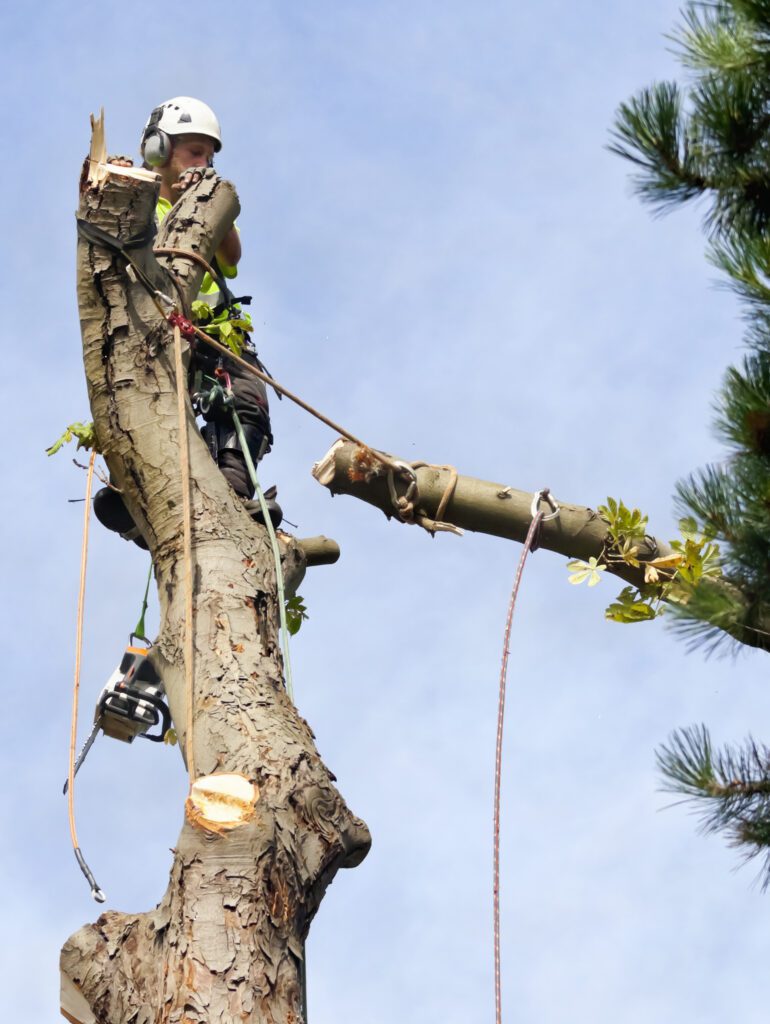
Before anything else, keep people and pets away from the affected area. Damaged trees can shift, settle, or drop further branches with no warning, even hours after a storm has passed. Never attempt to cut a fallen branch or leaning trunk yourself — chainsaw injuries and falls are among the most common causes of serious accidents during DIY storm clean-up.
If a tree is resting on power lines, do not touch it or anything connected to it. Contact your electricity network operator immediately, then call a professional tree service.
Step Two: Call a Qualified Emergency Tree Surgeon
A genuine 24/7 emergency tree service should be able to talk you through immediate safety steps over the phone and get a fully equipped, insured crew to your property as quickly as possible — day or night. When you call, it helps to have ready:
- Your postcode and the nearest access point for a vehicle
- Whether the tree is touching a building, fence, road, or power line
- Roughly how large the tree or branch is
- Whether anyone is currently unable to access their property because of it
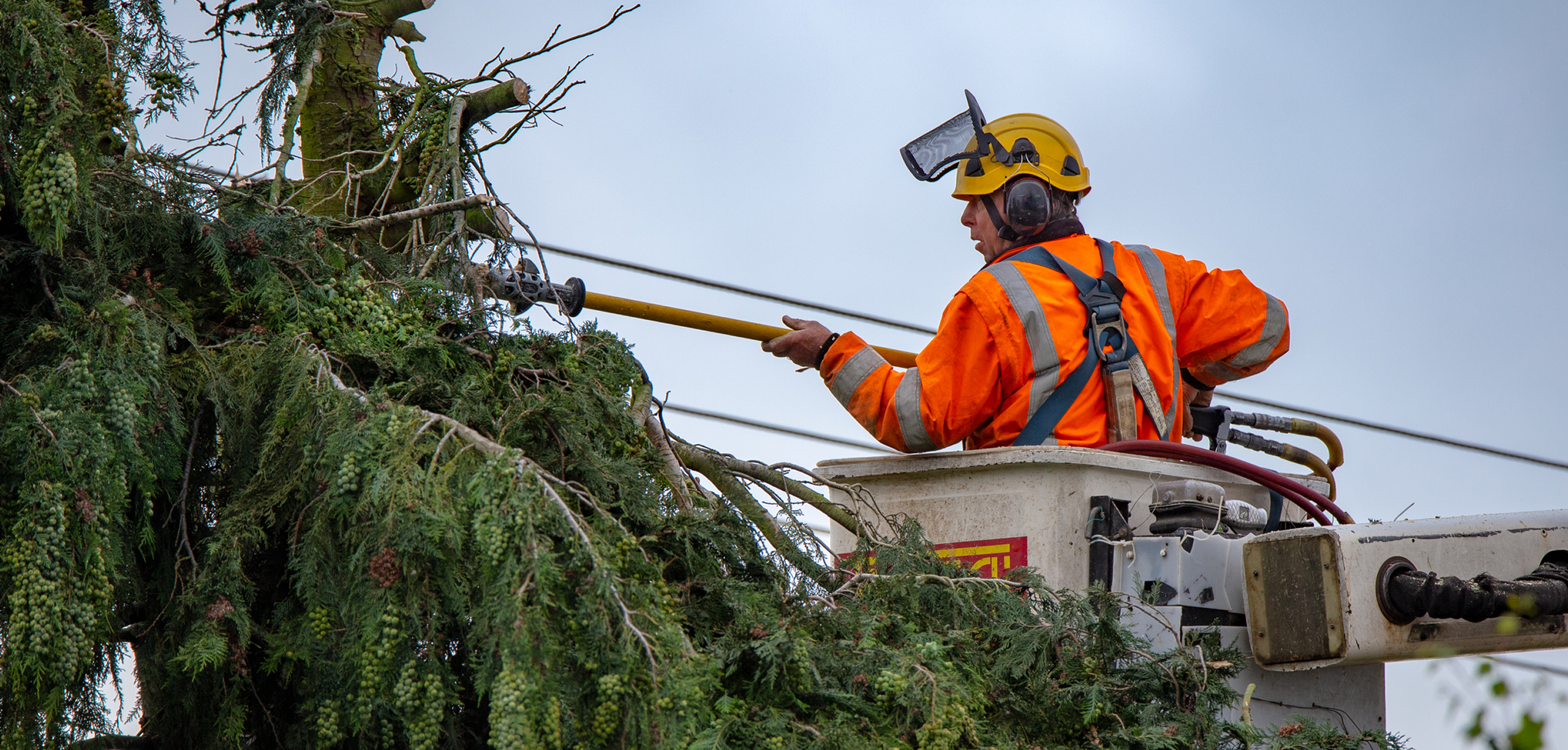
Reputable Chester tree surgeons carry rigging, cranes for larger jobs, and stump grinding equipment, so whether it’s a single garden tree or a full site clean-up after wider storm damage, the job can usually be handled by one team from start to finish — see our full tree felling and removal service for what’s involved in larger removals.
What Happens During an Emergency Call-Out
A typical emergency visit follows a consistent process:
- Assessment — the arborist checks the tree’s stability, surrounding hazards, and access before any cutting begins.
- Making safe — unstable limbs are secured or removed first to reduce immediate risk.
- Removal or sectional dismantling — larger trees near buildings are often taken down in sections using rigging rather than felled in one piece.
- Site clean-up — branches, timber and debris are cleared, chipped, or stacked as you prefer.
- Advice on next steps — if other trees on the property look at risk, a good tree surgeon will flag this so you’re not caught out twice.
Does Home Insurance Cover Storm-Damaged Trees?
Most UK home insurance policies cover damage caused by a fallen tree to your house, garage, or boundary structures, but coverage for simply removing a tree that hasn’t damaged anything is less consistent. It’s worth photographing the damage before any work begins and keeping the invoice from your tree surgeon, as most insurers will ask for this when processing a claim. If you’re unsure, a quick call to your insurer alongside your tree surgeon booking is the safest order of operations.
Areas We Respond To
Fast response matters most when a tree is blocking access or threatening a structure, which is why local coverage matters. Emergency crews serving Chester typically also cover Wirral, Ellesmere Port, Hoole, Upton, Saltney, Tarvin, Frodsham, Runcorn, Wrexham, and North Wales. Check our full service areas list to confirm coverage near you, or see our dedicated tree surgeon Chester page for local details.
Preventing Future Storm Damage
Once the immediate emergency is dealt with, it’s worth having a wider health check on any remaining trees on the property. Deadwood removal, crown thinning, and reducing the sail effect of a dense canopy can all reduce the chance of storm damage next time round. This is typically far cheaper as planned maintenance than as an emergency call-out.
FAQs
How quickly can an emergency tree surgeon get to me in Chester?
Most 24/7 services aim to reach urgent, hazard-level jobs within an hour or two, though this depends on the time of day and how widespread any storm damage is across the region.
Will I be charged more for a night-time or weekend call-out?
Emergency and out-of-hours work is usually priced differently from scheduled jobs because of the rapid response, specialist equipment, and safety planning required — always ask for a clear price before work begins where the situation allows.
Can you remove a tree that’s resting on my roof?
Yes, but this is a job for a fully insured, trained crew who can assess load, rigging points, and roof risk safely — never attempt this yourself.
What if I’m not sure whether it’s a genuine emergency?
If a tree or branch poses an immediate risk to people, vehicles, structures, or power lines, treat it as an emergency and call a professional straight away.
Need urgent help with a fallen or storm-damaged tree in Chester or the surrounding area? Get in touch: Contact Us