Different Types of Tree Pruning: A Complete Guide
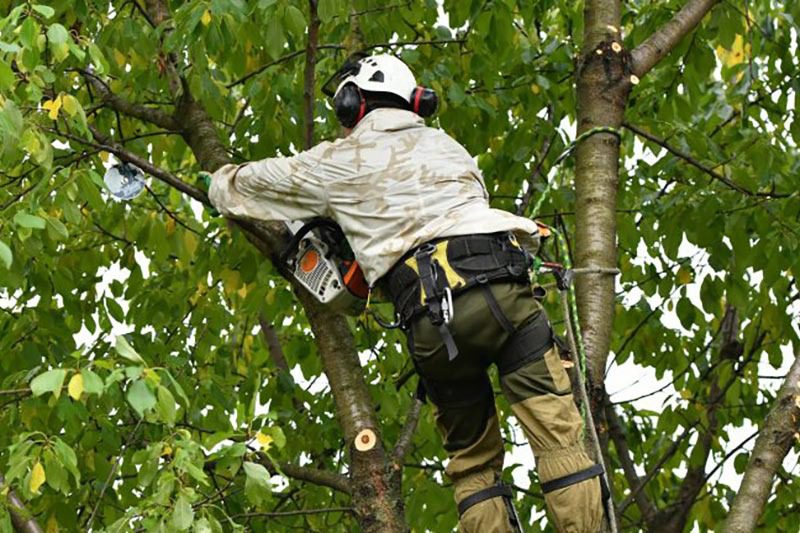
Tree pruning is an essential part of maintaining tree health, safety, and appearance.
It involves the careful removal of selected branches to improve structure, encourage healthy growth, and reduce risks such as falling limbs.
When done correctly and at the right time, pruning helps trees thrive for many years.
Different pruning techniques are used depending on the tree’s condition, age, and surrounding environment.
This guide explains the main types of tree pruning, their purposes, and their benefits.
Key Tree Pruning Techniques
1. Crown Thinning – Improving Light and Airflow
Crown thinning involves selectively removing branches throughout the canopy to reduce density.
This allows:
- More sunlight to reach inner branches
- Improved air circulation
- Reduced wind resistance
Benefits include healthier foliage and a lower risk of branch failure.
Thinning should always maintain the tree’s natural shape and avoid excessive foliage removal.
According to professional arboriculture standards, crown thinning should be carried out gradually to protect tree health (Arboricultural Association – UK).
https://www.trees.org.uk/Help-Advice/Pruning/Crown-Thinning
2. Crown Lifting – Increasing Clearance
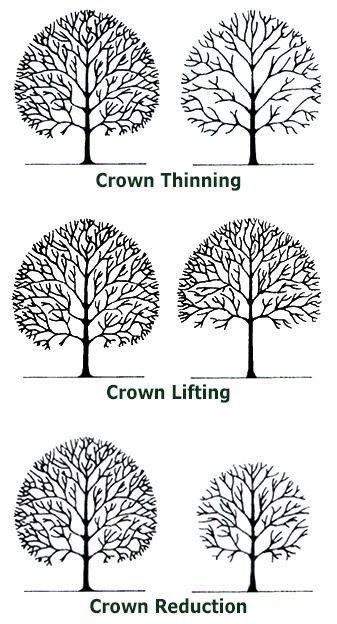
Crown lifting removes lower branches to create more space beneath the tree.
This is commonly done to:
- Improve pedestrian and vehicle access
- Increase visibility
- Prevent obstruction to buildings or pathways
Care must be taken not to remove major structural branches.
The aim is to maintain a strong crown framework while improving clearance.
3. Crown Reduction – Reducing Tree Size
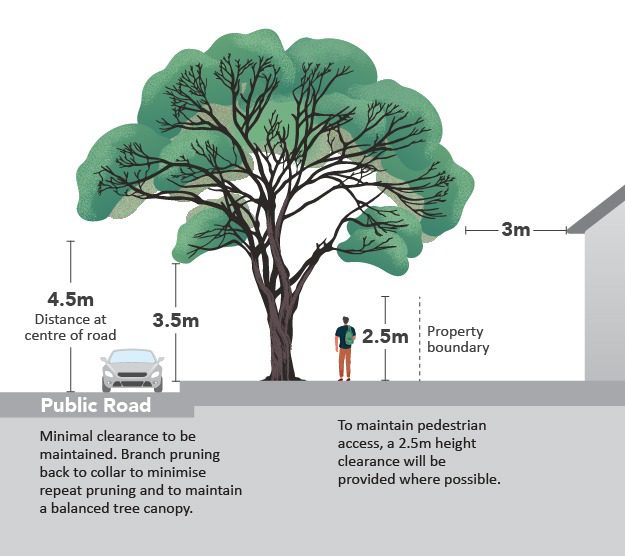
Crown reduction reduces the overall height and spread of a tree while maintaining its natural form.
This technique:
- Minimises mechanical stress
- Improves wind resistance
- Reduces excessive shading
Cuts should be made back to suitable growth points to preserve tree health and appearance.
Poor crown reduction can cause long-term damage if done incorrectly.
4. Deadwooding – Removing Dead or Diseased Branches
Deadwooding involves removing dead, dying, or diseased branches that may pose safety risks.
Benefits include:
- Reduced risk of falling limbs
- Improved tree health
- Prevention of disease spread
Cuts should follow the natural branch collar to minimise injury and encourage proper healing.
Deadwooding is often recommended as part of routine tree maintenance and safety management.
5. Pollarding – Creating a Controlled Canopy
Pollarding is a specialised pruning method where upper branches are cut back to a fixed height.
It is commonly used on species such as:
- Willow
- Poplar
- Plane trees
Pollarding encourages dense regrowth and helps control tree size in urban areas.
This technique requires regular, cyclical maintenance and should only be carried out by trained professionals to avoid damaging the tree.
Guidance on safe and sustainable pollarding practices is outlined by the Forestry Commission (UK).
https://www.gov.uk/government/organisations/forestry-commission
6. Formative Pruning – Shaping Young Trees
Formative pruning focuses on young trees to establish a strong, balanced structure.
This early pruning removes:
- Weak branches
- Crossing or rubbing limbs
- Poorly positioned growth
Proper formative pruning prevents future structural issues and supports long-term tree health.
7. Restoration Pruning – Reviving Neglected Trees
Restoration pruning is used on trees that have been poorly maintained or neglected.
The process involves:
- Gradual removal of dead and overgrown branches
- Multiple pruning stages over time
- Encouraging healthy regrowth
This method helps restore tree structure, improves appearance, and extends the tree’s lifespan.
Best Seasons for Tree Pruning
Correct timing is essential to maximise the benefits of pruning:
- Deciduous trees: Late winter to early spring
- Evergreen trees: Late winter to early spring
- Flowering trees: Immediately after flowering
- Fruit trees: Late winter to early spring
- Conifers: Late winter to early spring
Pruning during dormancy allows wounds to heal effectively and reduces disease risk.
For flowering trees, pruning after blooming helps preserve next season’s flowers.
Seasonal guidance is also supported by UK environmental and woodland authorities such as the Woodland Trust.
https://www.woodlandtrust.org.uk/trees-woods-and-wildlife/tree-care
Signs Your Tree Needs Pruning
Your tree may need pruning if you notice:
- Overgrown branches blocking access or views
- Dead, damaged, or diseased limbs
- Branches crossing or rubbing together
- Growth close to buildings or power lines
- Reduced leaf density or dieback
- Visible pest or disease issues
Early intervention helps prevent safety risks and costly damage.
Summary
Tree pruning plays a vital role in maintaining tree health, structure, and safety.
Techniques such as crown thinning, lifting, reduction, deadwooding, pollarding, formative, and restoration pruning each serve a specific purpose.
Correct timing, careful cuts, and professional expertise are essential for long-term results.
For larger or complex pruning work, using a qualified tree surgeon ensures safe, effective pruning and protects the health of your trees.