
A pruning method that keeps trees smaller by removing upper branches and maintaining a compact, controlled shape.
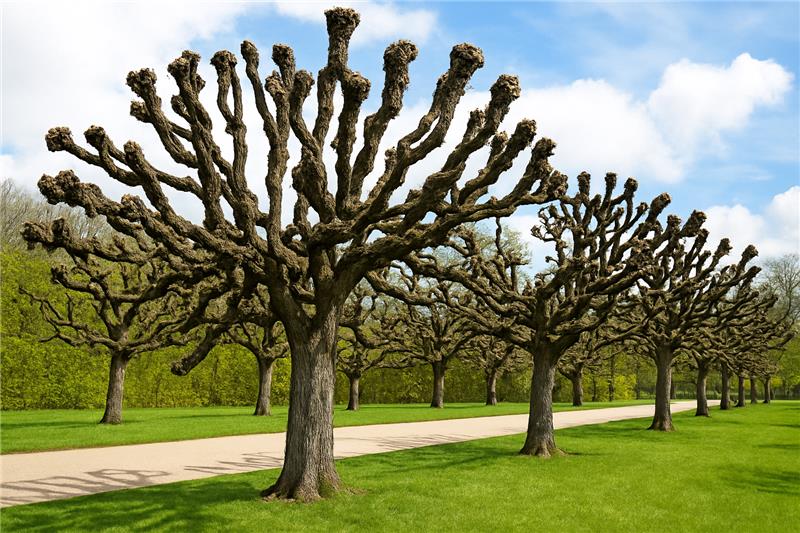
Tree pollarding is a pruning technique that keeps trees smaller than they naturally grow.
Pollarding is the most significant form of pruning, in which you remove the upper branches leaving just the main framework. A routinely pollarded tree will have characteristic knobs/knuckles at the end of its remaining limbs.
There are many reasons and situations where pollarding trees may be required, some of which we will outline below.
- To restrict a tree from outgrowing its environment.
- To reduce the shade cast by the tree.
- To stop the tree from damaging overhead wires.
- To prevent trees from obscuring street lights, signs or motorists' and pedestrians' field of vision.
- To allow the free passage of vehicles.
- To reduce root growth.
- To increase air circulation.
- To limit the amount of leaf and twig debris.
The pollarding of a tree should begin once it reaches its desired height, and annual or routine pollarding will maintain the tree at that size.
In most cases, it's best to pollard trees in late Winter or early spring.
The best way to maintain a pollarded tree is through annual pruning or, at a minimum, every 2-3 years.
Many use "pollarding" and "topping" interchangeably, but the processes and outcomes differ greatly. The significant difference between the two pruning methods is we pollard trees with design and future practicality in mind. In contrast, trees are often topped as a harsh corrective measure to achieve a specific height requirement.
Whether you need tree removal, trimming, stump grinding, hedge maintenance, or urgent storm assistance, we’re here to help.