The UK is home to an estimated three billion trees, with a significant number growing in towns and cities. Around 16% of all trees are located in urban areas, meaning millions sit close to homes, gardens, and shared property boundaries.
Because of this, overhanging branches and encroaching roots are a common issue for homeowners. Falling branches can pose safety risks, while leaves, fruit, and debris may cause mess, block gutters, or create slip hazards. These situations often raise an important question:
What does UK law say about overhanging trees, and who is responsible for the cost of pruning?
This guide explains the legal position in the UK, your rights as a property owner, and when professional tree advice is essential.
Overhanging Trees and UK Law
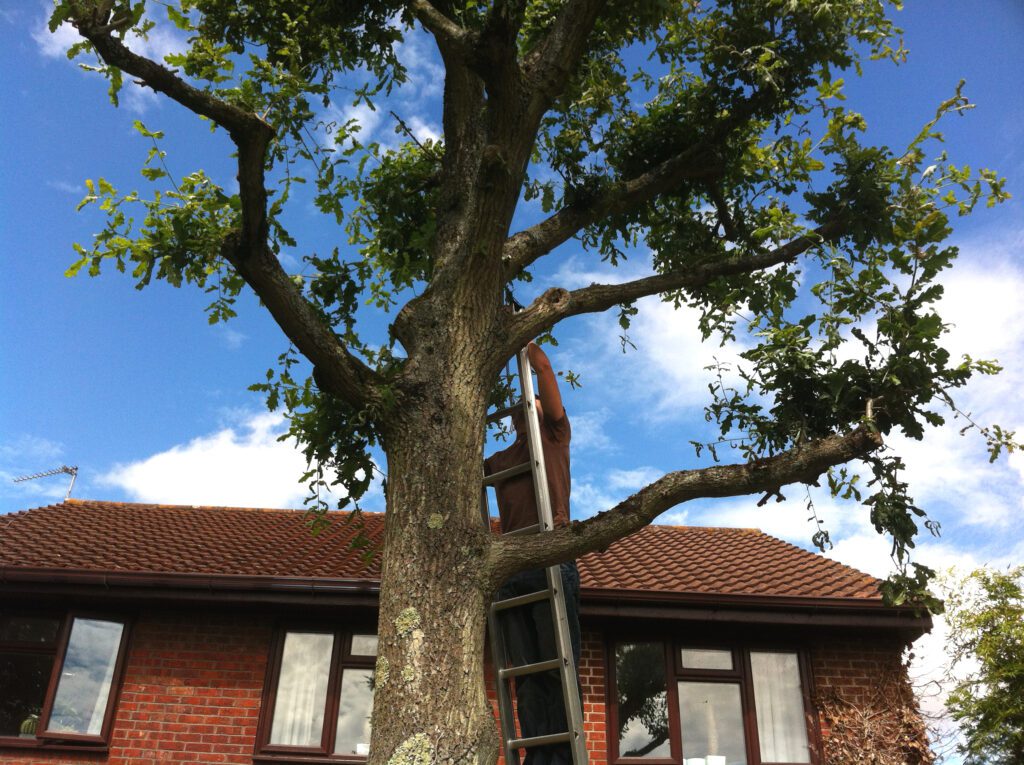
Tree law in the UK can appear confusing, especially as online information is often inconsistent. Understanding your legal rights and responsibilities before taking action can help avoid disputes and costly mistakes.
Can You Cut Overhanging Branches?
Under UK law, homeowners have what is known as the “right to abate a nuisance.”
This means you are legally allowed to cut back branches from a neighbour’s tree up to your property boundary, provided that:
- You do not cross the boundary line
- You do not enter your neighbour’s land without permission
- You do not cut beyond your side of the boundary
This right applies when branches overhang your land and are causing a nuisance, obstruction, or potential safety risk.
Official guidance on nuisance and boundary responsibilities can be found on GOV.UK, which provides clear legal information for homeowners.
Important Exceptions You Must Check First
Before carrying out any pruning or cutting, you must check whether the tree is legally protected.
Some trees are subject to:
- Tree Preservation Orders (TPOs)
- Conservation Area restrictions
If a tree is protected, permission from the local authority is required before any work takes place — even if the branches overhang your land.
⚠️ Carrying out unauthorised work on a protected tree can lead to substantial fines and legal action.
What Happens to the Cut Branches?
Any branches or material you cut remain the legal property of the tree owner.
This means:
- You must offer the cuttings back to your neighbour
- If they refuse, you can arrange lawful disposal
- Throwing branches back over the fence is illegal and may be considered fly-tipping
Naturally fallen leaves, fruit, or debris are treated differently and do not need to be returned.
What If the Neighbour Objects?
Neighbours may object if pruning affects the appearance or balance of their tree. However, if the work:
- Stays within your boundary
- Is carried out legally
- Does not damage the tree
They generally have no legal grounds to prevent it.
That said, discussing the issue beforehand is strongly recommended. Clear communication often prevents disputes and protects neighbourly relationships.
For impartial advice on neighbour disputes, Citizens Advice offers helpful guidance.
https://www.citizensadvice.org.uk
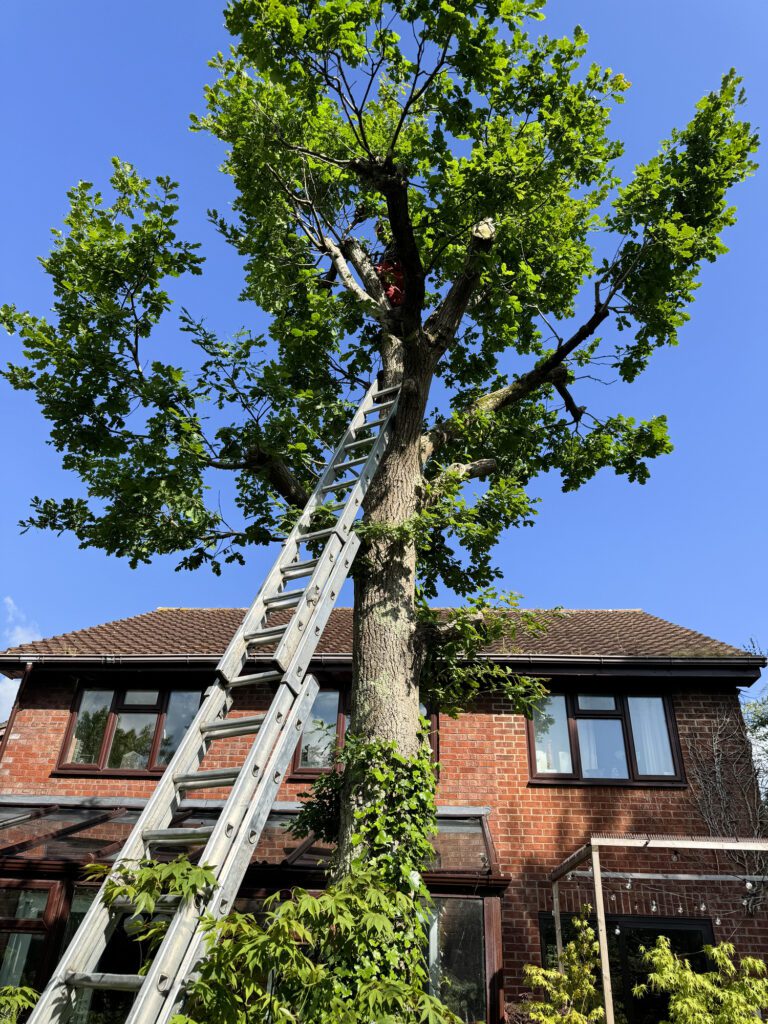
Who Pays for Tree Pruning?
When the Cost Is Your Responsibility
If overhanging branches are not dangerous and you simply want them removed for convenience, the responsibility usually falls to you.
In this situation:
- You arrange and pay for the work
- You must remain within legal limits
- You must offer cuttings back to the tree owner
When the Tree Owner May Be Liable
If a tree is unsafe or causing damage, responsibility may shift to the tree owner. This includes damage to:
- Roofs or gutters
- Walls or foundations
- Paths, driveways, or structures
UK law expects tree owners to take reasonable steps to prevent foreseeable harm. If they fail to do so, they may be liable for repairs and necessary remedial work.
Local authorities can also intervene if a tree poses a danger to people or property.
What About Tree Roots?
Tree roots are treated similarly to overhanging branches under UK law.
You may remove roots encroaching onto your land provided that:
- You only cut within your boundary
- You do not enter neighbouring land without permission
- You offer removed roots back to the owner
- You take reasonable care not to destabilise or kill the tree
⚠️ If your actions cause the tree to become unsafe or fail later, you could become liable — which is why professional advice is strongly recommended.
Practical horticultural guidance on roots and tree health is available from the Royal Horticultural Society.
Best Practice for Handling Overhanging Tree Issues
Although the law allows homeowners to act, mistakes can quickly lead to disputes or liability.
Best practice includes:
- Confirming property boundaries
- Checking TPO and conservation status
- Communicating with neighbours before starting work
- Seeking professional assessment where safety or damage is involved
- Avoiding aggressive or unilateral action
In many cases, shared inspections or agreed solutions prevent escalation.
The Value of Professional Tree Advice
Qualified tree professionals provide impartial assessments based on safety, tree health, and legal compliance.
Professional arborists can:
- Identify structural risks
- Advise on lawful pruning
- Produce written reports for disputes
- Ensure work meets industry standards
The UK’s leading professional body for arborists, the Arboricultural Association, sets best-practice standards for safe tree work.
Summary
Overhanging trees are a common issue across the UK, especially in built-up areas. While homeowners have the right to manage encroaching branches and roots, those rights come with clear legal limits and responsibilities.
Understanding when you can act, when permission is required, and who pays for tree work can save time, money, and neighbourly relationships. Calm communication and professional guidance remain the most effective way to reach a fair outcome.
Need Professional Tree Advice in Chester?
If you’re unsure about your legal position or concerned about tree safety, Tree Service Chester offers expert support including:
- Tree pruning and crown reduction
- Boundary and neighbour dispute advice
- Tree risk and safety assessments
- TPO and conservation area guidance
Visit https://www.treeservicechester.co.uk/ to speak with a qualified local tree specialist.