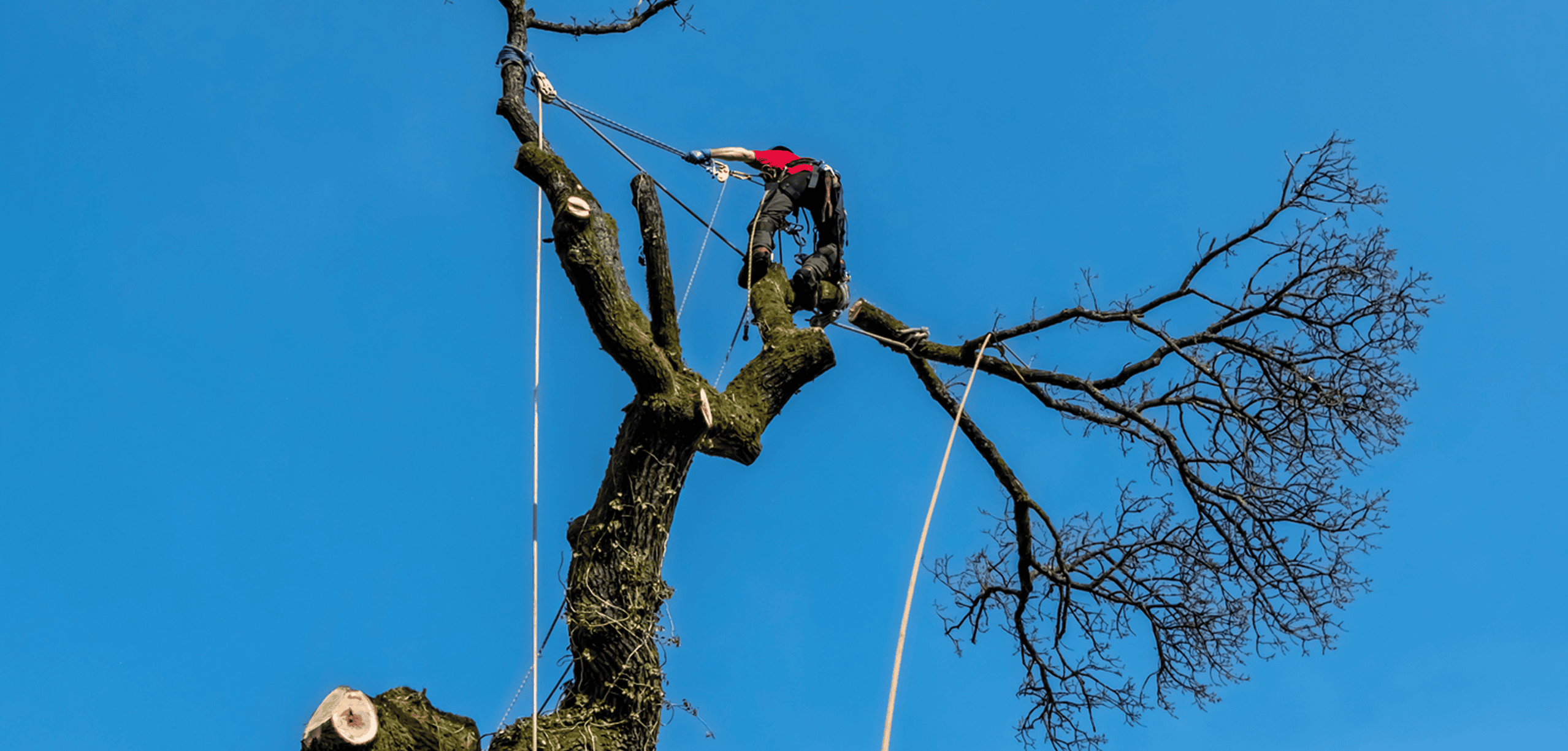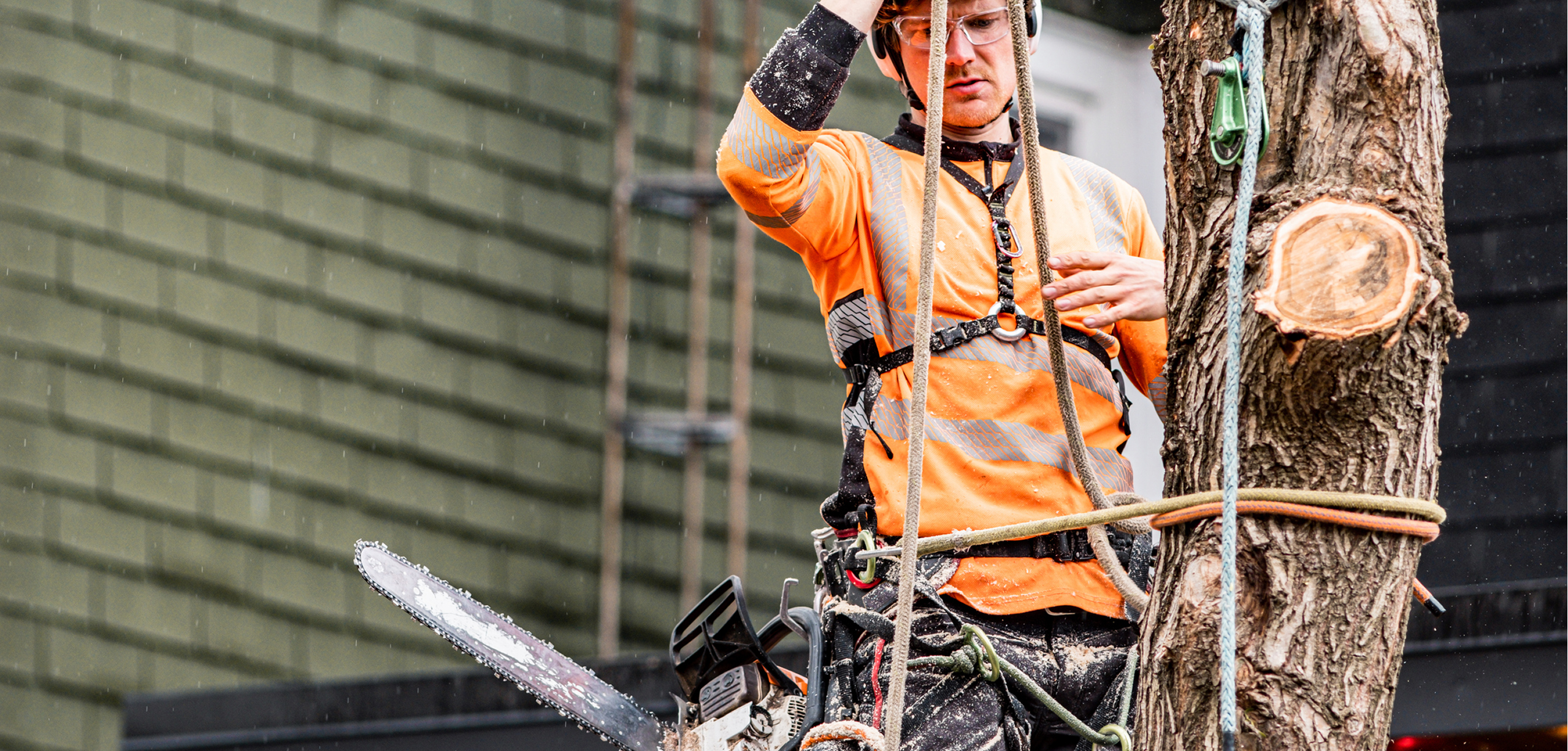
October is the best time to get your trees ready for winter. Leaves are coming down, the structure of each tree is easier to see, and the autumn and winter gales that regularly hit Cheshire are only weeks away. Work through this checklist now, and call us for anything beyond what you can safely do from the ground — including tree trimming and pruning.
1. Clear Fallen Leaves
It’s nobody’s favourite job, but clearing leaves protects your lawn from being smothered, reduces slip hazards on paths and drives, and cuts down on the fungal spores that rotting leaf litter can spread. Healthy leaves make excellent compost or leaf mould; leave a few small piles in quiet corners as shelter for overwintering wildlife.
2. Walk Round and Inspect Each Tree
Stand back and look at the whole tree, then check:
- That it’s standing upright — a new or worsening lean needs prompt professional attention
- The ground around the base for lifted soil, cracks or erosion that suggest root movement
- Fungi growing on the trunk or at the base, which can indicate internal decay
- Splits, cracks or hollow sections in the trunk or major limbs
- Dead, hanging or broken branches, especially over paths, parking spaces and neighbours’ boundaries
If anything worries you, don’t wait for the first storm. Our guide to the 8 warning signs a tree is dying or dangerous explains what to look for.
3. Remove Deadwood While You Can See It
Deadwood decays, attracts fungi and pests, and is the first thing to come down in high winds. Although it can be removed at any time of year, autumn is a particularly good time because, as the leaves drop, the structure of the tree is easier to see. Anything high up or on a large tree should be left to an insured, qualified crew rather than tackled from a ladder.
4. Reduce Storm Risk
Trees are most at risk from high winds while they are still in leaf, and some trees are more vulnerable than others. Be particularly alert if you have:
- Very old trees, which are more prone to failure in a gale
- Trees whose roots have been disturbed by recent building, trenching or patio work
- Dense, heavy crowns that act like a sail in strong winds
- Trees leaning towards buildings, roads or power lines
Selective pruning to remove weak or overweight limbs, or crown thinning on suitable species, can reduce wind resistance. Check tree stakes and ties on younger trees are firm but not cutting into the bark.
5. Check Whether Your Tree Is Protected
Before any pruning or felling, confirm there’s no Tree Preservation Order or conservation area restriction. Our guide to Tree Preservation Orders in Chester explains how to check with your council.
6. Look After Young and Newly Planted Trees
- Newly planted trees are vulnerable for their first two to three years, so keep them watered in dry spells and mulch the base
- Make sure stakes are secure before winter gales arrive
- Protect young bark from deer and rabbits with guards if they’re active in your area
- Remember that October to November is a good time to plant new trees, as they can establish roots before spring
7. Finish Hedge Work
Bird nesting season ends in late August, so autumn through to February is the safe window for major hedge cutting. See our guide to hedge trimming in Chester for species-by-species timing and the legal detail.
8. Book Now, Not After the Storm
After a major storm, tree surgeons are typically inundated with call-outs and tend to prioritise existing customers and genuine emergencies. Getting your pruning and inspections booked in October means you’re not joining the queue in the middle of a gale.
Winter Storm Emergency Plan
If a tree does come down, keep everyone clear, stay away from anything touching power lines and call a professional. Our guide to what to do when a tree falls in Chester covers the steps in order, including photographing damage for insurance claims. For urgent call-outs see our emergency tree services.
Quick Autumn Checklist
| Task | When | DIY or professional? |
|---|---|---|
| Clear leaves from lawns and paths | Oct–Nov | DIY |
| Inspect trees for lean, fungus, cracks | Oct | DIY, then professional if concerned |
| Remove deadwood and weak limbs | Oct–Dec | Professional for anything above head height |
| Check stakes, ties and tree guards | Oct | DIY |
| Major hedge cutting | Sept–Feb | DIY or professional |
| Storm-risk pruning / crown thinning | Oct–Feb | Professional |
| Check TPO / conservation area status | Before any work | Council or your tree surgeon |
Further Reading and Authoritative Sources
For independent, up-to-date guidance, these organisations are worth bookmarking:
- Arboricultural Association — Find a tree surgeon — guidance on choosing a competent contractor
- The Tree Council — tree care and planting advice
- Woodland Trust — species guides and tree-planting information
- GOV.UK — Hedgerow management rules — official cutting-season rules for agricultural hedgerows
FAQs
Is autumn a good time to prune trees?
Yes, for many trees: deadwood removal and safety pruning are often easier in autumn, and winter dormancy is the best window for major pruning on most species. Always check nesting and protection status first.
Should I remove all the leaves from my garden?
Clear lawns, paths and drains, but leave some leaf piles in quiet spots for wildlife, and compost the rest.
When should I plant a new tree?
October to November is a great time, giving the tree time to put on root growth before spring.
How do I know if a tree is likely to fail in a storm?
Warning signs include a new lean, root plate movement, fungal growth, cracks and large dead limbs. A professional inspection can confirm the level of risk.
Want a pre-winter tree check for your Chester garden? Request a free quote: Contact Us